Different Types of Moles and What They Mean
- posted: Dec. 19, 2025
Moles are common skin growths that most people develop at some point in their lives. While many moles are harmless, some can change over time and require closer attention. At Aesthetic Dermatology in Cumming, GA, Dr. Trisha Daley, MD, FAAD, helps patients understand what different types of moles mean and when a professional skin evaluation is important for long-term skin health.
Common Types of Moles
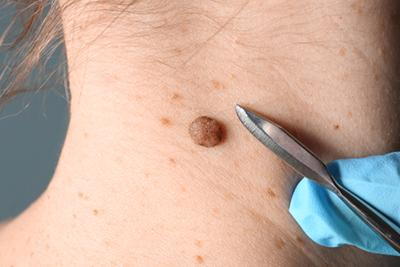
Most common nevi, or moles, are round or oval with smooth edges and a uniform color. They typically develop during childhood or early adulthood and usually remain stable in appearance over time. These moles are often tan, brown, or close to skin color and are generally considered safe as long as they do not change in size, shape, or color. Any noticeable changes should be evaluated by a dermatology professional.
Congenital Moles
Congenital nevi are present at birth or appear shortly afterward. They can vary in size, color, and texture, and may be flat or raised. While many congenital nevi are harmless, larger lesions carry a higher risk of developing skin cancer later in life. Regular evaluation by a dermatology specialist is important to identify changes as early as possible.
Atypical or Dysplastic Moles
Atypical nevi differ from common moles and often have irregular borders, uneven color, or a larger size. Although these moles are not cancerous, individuals with multiple atypical nevi have an increased risk of skin cancer. Routine skin screenings are commonly recommended for ongoing monitoring.
When a Mole May Be Concerning
Changes in size, shape, color, or texture can signal a problem. Moles that itch, bleed, darken, or develop uneven edges should be evaluated promptly. Dermatologists often use the ABCDE guidelines to assess moles and determine whether further testing or a biopsy is needed.
The Importance of Regular Skin Exams
Professional skin exams play a key role in the early detection of skin cancer, including melanoma. Establishing a baseline allows subtle changes to be identified over time. Regular evaluations are especially important for patients with a family history of skin cancer, frequent sun exposure, or numerous moles.
Dermatologic Care in Cumming, GA
Understanding your skin helps protect your health. At Aesthetic Dermatology in Cumming, GA, Dr. Trisha Daley provides thorough skin evaluations and guidance tailored to each patient’s needs. If you have questions about moles or notice changes in your skin, call (770) 205-0104 to schedule an appointment and receive expert dermatologic care.
- posted: Dec. 19, 2025
Moles are common skin growths that most people develop at some point in their lives. While many moles are harmless, some can change over time and require closer attention. At Aesthetic Dermatology in Cumming, GA, Dr. Trisha Daley, MD, FAAD, helps patients understand what different types of moles mean and when a professional skin evaluation is important for long-term skin health.
Common Types of Moles
Most common nevi, or moles, are round or oval with smooth edges and a uniform color. They typically develop during childhood or early adulthood and usually remain stable in appearance over time. These moles are often tan, brown, or close to skin color and are generally considered safe as long as they do not change in size, shape, or color. Any noticeable changes should be evaluated by a dermatology professional.
Congenital Moles
Congenital nevi are present at birth or appear shortly afterward. They can vary in size, color, and texture, and may be flat or raised. While many congenital nevi are harmless, larger lesions carry a higher risk of developing skin cancer later in life. Regular evaluation by a dermatology specialist is important to identify changes as early as possible.
Atypical or Dysplastic Moles
Atypical nevi differ from common moles and often have irregular borders, uneven color, or a larger size. Although these moles are not cancerous, individuals with multiple atypical nevi have an increased risk of skin cancer. Routine skin screenings are commonly recommended for ongoing monitoring.
When a Mole May Be Concerning
Changes in size, shape, color, or texture can signal a problem. Moles that itch, bleed, darken, or develop uneven edges should be evaluated promptly. Dermatologists often use the ABCDE guidelines to assess moles and determine whether further testing or a biopsy is needed.
The Importance of Regular Skin Exams
Professional skin exams play a key role in the early detection of skin cancer, including melanoma. Establishing a baseline allows subtle changes to be identified over time. Regular evaluations are especially important for patients with a family history of skin cancer, frequent sun exposure, or numerous moles.
Dermatologic Care in Cumming, GA
Understanding your skin helps protect your health. At Aesthetic Dermatology in Cumming, GA, Dr. Trisha Daley provides thorough skin evaluations and guidance tailored to each patient’s needs. If you have questions about moles or notice changes in your skin, call (770) 205-0104 to schedule an appointment and receive expert dermatologic care.
Visit Office

960 Sanders Road, Suite 300, Cumming, GA, 30041
(770) 205-0104